
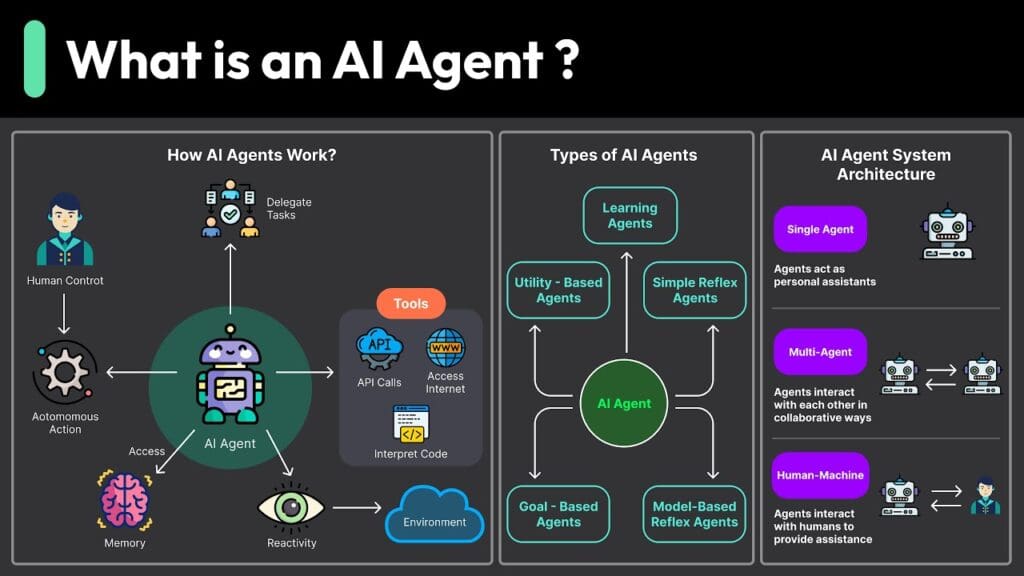
Execution defines performance in modern organizations. The speed, consistency, and quality of work depend on how effectively workflows move across systems, teams, and decisions. AI agents are becoming a core part of this execution layer. They operate within workflows, carry out defined actions, and support continuous progress across business functions.
I have experienced firsthand how operational complexity builds as teams scale. Processes expand, coordination increases, and maintaining consistency across functions requires significant effort. Introducing AI agents into our workflows created structure in execution. Tasks moved forward with greater continuity, decisions were supported with timely inputs, and teams were able to focus on higher-value responsibilities with more clarity.
AI agents are now influencing customer support, internal operations, sales execution, financial workflows, and knowledge management. Their ability to operate within defined boundaries and execute tasks across systems is reshaping how organizations approach daily work.
AI capability now includes initiating actions, coordinating workflows, and maintaining execution continuity. Organizations that understand how AI agents function can design systems that support speed, accountability, and scalability across operations.
At Zerem.ai, we work with leadership teams to operationalize AI agents across business functions. Our focus is workflow transformation. We embed agents into real processes, define governance structures, and ensure teams understand how to work alongside autonomous systems with clarity and control.
This blog explains what AI agents are, how they function, where they create value, and how organizations can implement them responsibly.
Define what AI agents are in a business context
Explain how they differ from traditional automation and AI tools automation
Present real-world use cases across departments
Share data-backed insights on adoption and impact
Outline a structured framework for implementation
Explain governance and risk considerations
Show how Zerem.ai enables AI agent adoption
AI agents are systems that can perceive inputs, make decisions based on defined logic or learned patterns, and take actions to achieve specific goals within a workflow.
Unlike static tools, AI agents operate with:
Context awareness
Goal-oriented behavior
Ability to interact with multiple systems
Memory of previous interactions (in some implementations)
Autonomous or semi-autonomous execution
A simple way to understand AI agents:
Traditional software executes commands. AI agents decide which commands to execute and when.
According to Gartner, agentic AI systems are expected to become a major driver of enterprise productivity by enabling software to act independently within defined parameters (Gartner AI trends research).
Understanding this distinction is critical for implementation.
Traditional automation follows scripts. AI agents manage workflows.
AI agents are gaining importance because organizations are moving from experimentation to execution. The data shows a clear shift toward workflow-level automation, along with gaps in scaling, coordination, and measurable impact.
AI is already embedded across organizations, but most implementations remain shallow.
According to McKinsey & Company, 78% of organizations use AI in at least one business function, up from 55% just a year earlier. However, only a minority use AI across multiple functions consistently.
This indicates that AI is present, but not yet deeply integrated into workflows where AI agents operate.
Adoption does not translate into operational impact without workflow integration.
McKinsey research shows that only 38% of organizations have successfully scaled AI beyond pilot stages, while the majority remain in experimentation mode.
AI agents address this gap by enabling end-to-end execution rather than isolated use cases.
Organizations are beginning to explore agent-based systems as the next step in AI maturity.
According to McKinsey & Company, 62% of organizations are already experimenting with AI agents, signaling a transition toward autonomous workflow execution.
This reflects a shift from tool usage to system-level automation.
Even with high adoption, measurable business impact remains constrained.
Research shows that only 39% of organizations report measurable financial impact (EBIT contribution) from AI, despite widespread deployment.
This gap highlights that value is created when AI is embedded into workflows, which is the role AI agents fulfill.
AI contributes directly to productivity improvements when integrated into operations.
According to PwC, AI is projected to contribute up to $15.7 trillion to the global economy by 2030, largely driven by automation and efficiency gains.
AI agents accelerate this impact by automating multi-step workflows instead of single tasks.
AI enhances how quickly organizations analyze data and act on it.
A multi-industry study shows that 93% of firms using AI report improved decision-making speed and clarity, particularly in areas like forecasting and operations.
AI agents extend this by linking decisions directly to execution.
AI adoption reduces manual effort when embedded into daily workflows.
Studies indicate that AI-driven process improvements can significantly reduce time spent on repetitive tasks, with some estimates showing substantial reductions in administrative workload equivalent to multiple hours per week per employee.
AI agents operationalize these gains by handling continuous, multi-step processes.
The data reveals a consistent pattern:
AI adoption is high across organizations
Scaling and integration remain limited
Measurable impact depends on workflow-level execution
Organizations are moving toward agent-based systems
AI agents sit at the center of this transition. They connect data, decisions, and actions into a unified execution layer.
Organizations that implement AI agents within structured workflows can improve speed, consistency, and operational performance while reducing manual coordination.
AI agents create value when embedded into high-frequency, coordination-heavy processes.
AI agents can:
Classify incoming queries
Respond to common issues
Escalate complex tickets
Update CRM systems
This reduces response time and improves service consistency.
Agents can:
Enrich lead data
Score prospects
Generate outreach drafts
Schedule follow-ups
Sales teams spend less time on manual preparation.
Agents can:
Extract invoice data
Match transactions
Flag anomalies
Generate reports
This reduces errors and accelerates financial cycles.
Agents support:
Resume screening
Candidate communication
Onboarding workflows
Policy query handling
Consistency improves across employee experience.
Agents can:
Analyze campaign performance
Generate content variations
Segment audiences
Trigger follow-ups
Marketing teams gain speed and precision.
Agents coordinate:
Task assignments
Status tracking
Risk alerts
Workflow updates
This reduces manual coordination overhead.
Not all workflows require agent-based systems.
High-impact use cases typically include:
Repetitive processes
Multi-step workflows
Cross-system coordination
Data-heavy decision points
Time-sensitive execution requirements
AI agents perform best when workflows are structured but require adaptive decisions.
Implementing AI agents requires more than deploying tools or enabling automation features inside existing systems. Without structured design, governance boundaries, and measurable outcomes, AI agents operate in isolation or create fragmented execution across workflows.
Organizations that successfully adopt AI agents treat them as an operational execution layer. They define where agents act, how decisions are made, what boundaries exist, and how performance is measured across workflows.
At Zerem.ai, we implement a structured framework that transforms AI agents from experimental capabilities into coordinated, enterprise-grade execution systems:
Align → Automate → Achieve
This model ensures AI agents operate with clarity, controlled autonomy, measurable impact, and organizational trust.
Before deploying AI agents into workflows, organizations must align on execution scope, decision boundaries, governance controls, and measurable outcomes.
This phase answers a foundational question:
Which workflows should AI agents own, what decisions can they make, and how will success be measured?
Define the role of AI agents within the business
Identify high-impact workflows suitable for agent execution
Establish governance, risk, and decision boundaries
Assign ownership and accountability across teams
Secure leadership alignment and operational readiness
Organizations identify where AI agents will create measurable operational impact.
Examples include:
Reducing workflow cycle time
Increasing execution speed across departments
Improving response time in customer-facing processes
Enhancing reporting accuracy and consistency
Reducing manual coordination overhead
Increasing throughput without adding headcount
Each outcome is tied to specific KPIs.
These KPIs define what success looks like for AI agent deployment.
Teams break down workflows into structured components:
Inputs (data, triggers, requests)
Decision points (rules, thresholds, conditions)
Actions (tasks, updates, communications)
Outputs (reports, updates, completed tasks)
This mapping identifies:
Where agents can act autonomously
Where human approval is required
Where risks exist
Where delays occur
High-priority workflows are selected based on:
Frequency of execution
Business impact
Cross-functional dependency
Data availability
Risk sensitivity
Cross-functional teams define:
Current workflow ownership
Existing inefficiencies
Tool dependencies
Risk concerns
Readiness for AI agent integration
Participants typically include:
Leadership
Operations
IT and data teams
Compliance and legal
Department heads
This ensures AI agents are introduced with shared understanding rather than isolated deployment.
AI agents require clearly defined operating constraints.
Organizations establish:
Approved systems agents can access
Data access and permission levels
Decision thresholds for autonomous action
Human-in-the-loop requirements
Escalation triggers for exceptions
Audit and logging requirements
Each workflow includes:
A business owner
A technical owner
A compliance reviewer
A performance owner
Authority is explicitly defined.
AI agent alignment must reflect how workflows operate across departments.
Executive Leadership
Operational visibility across workflows
Performance tracking dashboards
Risk signal monitoring
Strategic decision support
Operations
Process orchestration
Bottleneck detection
Throughput optimization
Exception handling
IT / Data
System integration architecture
API and workflow connectivity
Data pipeline validation
Access control management
Legal / Compliance
Data usage validation
Regulatory alignment
Audit trail requirements
Risk classification
Finance
Workflow cost tracking
ROI measurement
Forecast automation inputs
Financial reporting validation
Customer Operations
Ticket routing workflows
Response automation
Escalation handling
Customer interaction tracking
By the end of this phase, organizations have:
Defined AI agent use cases
Mapped workflows and execution points
Established governance boundaries
Assigned ownership and accountability
Identified measurable KPIs
Secured leadership alignment
AI agents move from concept to structured execution readiness.
With alignment in place, organizations deploy AI agents into real workflows with controlled autonomy and system integration.
This phase converts design into execution.
Embed AI agents into operational workflows
Enable controlled autonomous execution
Integrate agents across systems and tools
Build trust through reliability and visibility
Selected workflows are translated into AI agent-driven execution models.
Examples:
Input → analysis → decision → action → logging
Event trigger → classification → routing → execution → update
Monitoring → anomaly detection → recommendation → approval → action
Each workflow includes:
Defined triggers
Structured decision logic
Clear execution steps
Measurable outputs
AI agents are configured to:
Execute predefined actions
Generate structured outputs
Trigger system updates
Coordinate tasks across platforms
Surface recommendations
Autonomy is governed by:
Decision thresholds
Approval layers
Override mechanisms
Human control remains intact.
AI agents are embedded into core business systems:
CRM platforms
Finance and ERP systems
HRIS tools
Project management platforms
Communication tools
Integration ensures:
Reduced context switching
Continuous workflow execution
Unified data visibility
Governance operates alongside execution.
Organizations implement:
Real-time activity logging
Workflow monitoring dashboards
Exception tracking
Compliance validation checks
Weekly performance reviews
This ensures agents operate within defined boundaries.
As AI agents stabilize within workflows, organizations observe:
Reduced manual coordination
Faster execution cycles
Improved consistency in outputs
Fewer operational bottlenecks
Increased visibility into workflows
AI agents begin functioning as execution partners.
The Achieve phase transforms AI agents from deployed systems into measurable, scalable, and institutionalized capabilities.
Measure business impact of AI agents
Scale successful workflows
Strengthen governance maturity
Embed agents into operational culture
Organizations track:
Agent-driven task completion rates
Time saved per workflow
Reduction in manual effort
Error rate improvements
Workflow cycle time reduction
ROI by department
Performance is reported through standardized dashboards.
Validated AI agent workflows expand to:
Additional teams
More complex processes
Cross-functional operations
Higher-volume workflows
Scaling remains controlled and documented.
As adoption grows:
Permissions are refined
Oversight becomes targeted
Risk monitoring improves
Audit processes strengthen
Governance evolves alongside capability.
AI agents become part of:
Daily operational workflows
Standard operating procedures
Performance management systems
Leadership reporting cycles
Teams begin to rely on agents for execution support.
AI agents deliver value when:
Workflows are clearly defined
Decision boundaries are structured
Governance is implemented upfront
Integration is system-wide
Performance is measurable
Scaling is controlled
The Align → Automate → Achieve model ensures that AI agents evolve from isolated automation into enterprise execution infrastructure.
AI agents represent the next evolution of workflow automation. They move beyond assistance and into execution, coordination, and decision support.
Organizations that adopt AI agents strategically can achieve:
Faster execution cycles
Reduced operational overhead
Improved consistency
Higher workforce productivity
AI agents are not standalone tools. They are operational systems that require alignment, governance, and structured integration.
At Zerem.ai, we help organizations implement AI agents that support people, strengthen workflows, and scale performance responsibly.
If you want to explore how AI agents can transform your daily workflows, book your Complimentary 30-Minute AI Strategy Session with Zerem.ai.
